Tuesday, August 4, 2009

He certainly didn't run away with me

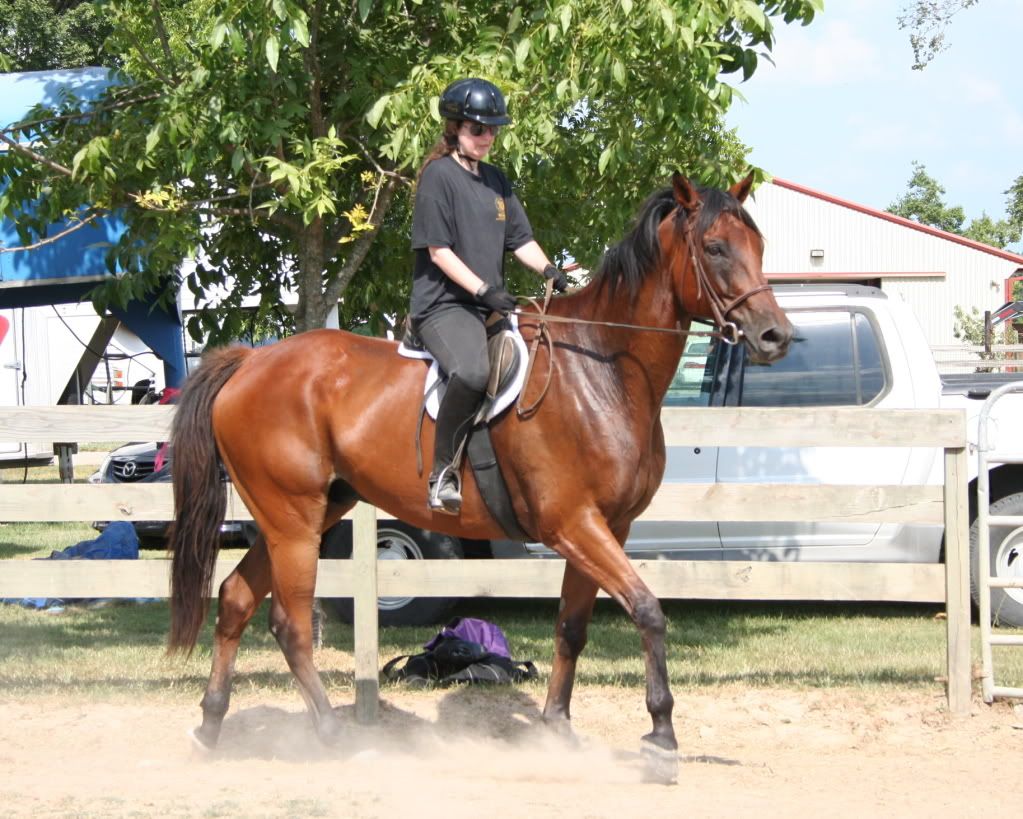
I haven't ridden my husband's horse, Ziggy, for a rather long time because he had a tendency to run away with Foxfire. But recently, Ziggy's been behaving better and Foxfire finally decided that Ziggy was calm enough for me to ride him. So this evening, I mounted up on Ziggy for the first time in quite a while. I had ridden him before, back when he was still recovering from the malnourishment and stomach ulcers that he suffered from when we first got him. As part of his rehabilitation, Foxfire or I would ride him at a walk for no more than 15 minutes. Gradually, we increased the amount of time that we would walk him. Once he'd recovered a bit more we added a few minutes of trot to his riding time and eventually Foxfire started cantering him. However, once Ziggy truly started feeling better, he became a somewhat "hot" horse. Foxfire had trouble keeping him at a trot, and once he started cantering, he was very difficult to slow down or stop. So Foxfire decided that he was too much horse for me to ride until I became a better rider and/or Ziggy became easier to control.

While Ziggy was recovering, I had never really had much trouble riding him. Sometimes, I did have to hold him back a little, but he had always listened to me and never actually went faster than I wanted him to. The only time, anything "bad" happened was one night at the barn when a mare had gotten loose and run around madly, getting all the other horses worked up. That night I did have to work a little harder to keep Ziggy at the walk. And to top it all off, while I was riding, something fell over and made a VERY LOUD BANG. Ziggy spooked and reared, then danced in place for a few moments before calming down. The thing is, it felt like he started to bolt, and I twitched the reins the way that I had been doing to keep him at a walk, and instead of bolting he reared. So... in a way, he was still paying attention to me. He was just too startled not to do anything, so he reared. After the initial fright of,"OMG, he's rearing!", it wasn't really that bad. My body just automatically leaned forward to keep my balance. I managed to keep my hands down and not tug on the reins so that I didn't pull him off balance or anything. And it only took a second or two for him to stop rearing and come back down. When he came back down, I was still leaning forward until Foxfire yelled at me to sit up straight. And Ziggy danced in place for a few more moments while I just tried to relax into his back and calm him down. Once he'd calmed down a bit more, I let him walk around a little to finish letting his nerves out. Once he was completely calm, I dismounted. It was almost time for the end of his ride anyway. Of course, this happened while he was still in recovery. If he'd been fully recovered and full of energy, it might have gone differently.

I rode him several more times after that, up until the time that Foxfire decided that he was getting to be too strong for me to handle. Lately, Foxfire has been working on Ziggy's brakes and our friend, JJ, has been helping. And if you've been reading this blog, you know that I've been taking riding lessons. So tonight, Foxfire decided that it was time for me to try and ride Ziggy again. We saddled him up, and I mounted and sat there very carefully for a few moments taking deep breaths and making sure that I was ready to hold him back if he tried to go faster than I wanted. Then I tapped him very gently with my heels and... nothing happened. I tapped a little harder and Ziggy very slowly began to walk. Veeeeery slooooowly. I tapped him again and he may have moved infinitesimally faster. I finally gave him a solid kick and he began to move about as fast as very fit turtle. The good thing was that he was staying nicely in frame while we moved at these glacial speeds. I tried loosening the reins, tightening the reins, pushing with my legs, my seat... Eventually, I managed to get a decent walk out of him. Not exactly energetic, but decent. So I walked him around for a bit with Foxfire following nervously nearby. Ziggy kept slowing to a meander any time that I stopped pushing him, and I admit, I was getting a little frustrated.

Foxfire said that Ziggy was always a bit slow when he first started riding him, but that once he started trotting, he became more energetic. So I decided to trot him. I was a little nervous, because trotting was usually where the trouble started. Ziggy would stay at a walk really well, but once he started trotting, he generally wanted to start cantering and keep cantering. But I was getting really frustrated going so slowly, and he was paying great attention to me in every other way. All I had to do was think about turning and he turned. And just a little bit of pressure with my inside leg moved him outside. I love a light horse! I just wish that he had been that light with his speed controls. Anyway, I shortened the reins a bit and gave an even firmer kick to get him to trot and he... walked slightly faster. I set myself firmly in the saddle and gave him a strong kick and he... walked slightly faster.

I loosened the reins and let him walk while Foxfire and I tried to figure out why Ziggy wouldn't trot. He didn't feel "off" to me in any way, but I asked Foxfire to watch him closely and see if it looked like Ziggy might be favoring a foot or showing any sign of pain that might make him not want to trot. Foxfire said that he looked fine. So he suggested that I get off and let him in the saddle to see if Ziggy would trot for him. Once Foxfire was in the saddle, Ziggy trotted right off. I watched and he looked perfectly sound and pain free, and Foxfire said that he felt fine, so we switched places again.

I finally managed to get a trot, but it was so slow that I couldn't even post to it and Ziggy fell right back out of it into the walk. I kept at it and got a slightly better trot which he kept up for about 50 feet then fell back into a walk. I eventually managed to get and keep a trot for the length of the field. He again slowed to a walk before I asked him to, so I forced him back into a trot. It was finally getting a little easier to get him to trot, and he was finally doing a nice working trot. But again, he fell back into a walk before I asked him to. I got him to trot again and only went for a little ways before asking him to slow to walk. I didn't go very far at the trot because I didn't want him to slow on his own before I asked him to. Also, it was getting dark and we needed to feed the chickens before they roosted for the night. So I decided to be satisfied that I had at least gotten a trot that lasted until I asked for a walk. I did a very brief cool down. He hadn't exactly gotten hot and sweaty. And that was it.

I don't know why Ziggy behaved so differently for me than he usually does for Foxfire. Of course, the next time I ride him, he may decide to go into race horse mode. Who knows. Foxfire doesn't want me to ride Ziggy unless he's home for a few more times before riding him when I'm alone. Since we're no longer at the barn, and no one else lives here to notice if something bad happens, that seems a reasonable precaution. Hopefully, Ziggy and I will work things out and I'll be able to ride him more regularly. But... he certainly didn't run away with me.

Monday, August 3, 2009

Pictures of potential horses

I have still been looking at horses, I just haven't been keeping up with posting about them. Mainly because I found a horse that I really liked and didn't want to post about him until I had bought him so that no one else would see my blog and go buy him. Unfortunately, someone else did find him and buy him before I was able to drive down for a second ride. Needless to say, I was rather upset and didn't really want to talk about horses for a while. The horse that I really liked is named Cat Ballew. Strangely enough, given my usual preferences, he is a 16.2 hand, solid bay, OTTB. But he listened to me and obeyed my slightest cue the way no other horse has done since I was learning to ride on Cash. I am still kicking myself for waiting to decide on him and letting someone else get him. Here is a link to pictures of Cat Ballew.


You can see the other horses that I have looked at by going to my Potential horses album and clicking on the names listed on the left. Obviously none of the others worked out for various reasons. If you have questions about any of them, feel free to ask, but I don't think that I'll be doing individual blog posts about them.

I have definitely learned a valuable lesson. Next time that I find a horse that I really like, I'm not going to wait around, I'm going to put a deposit on him right away.

Friday, July 24, 2009

Trimming Tessla

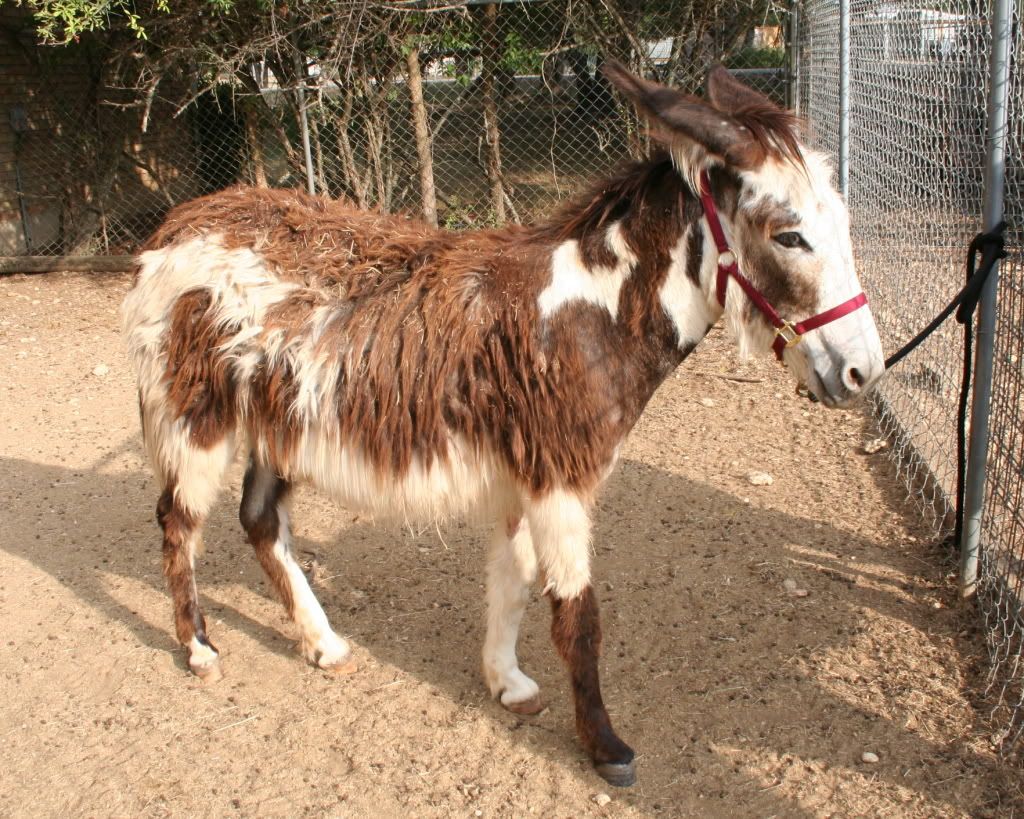
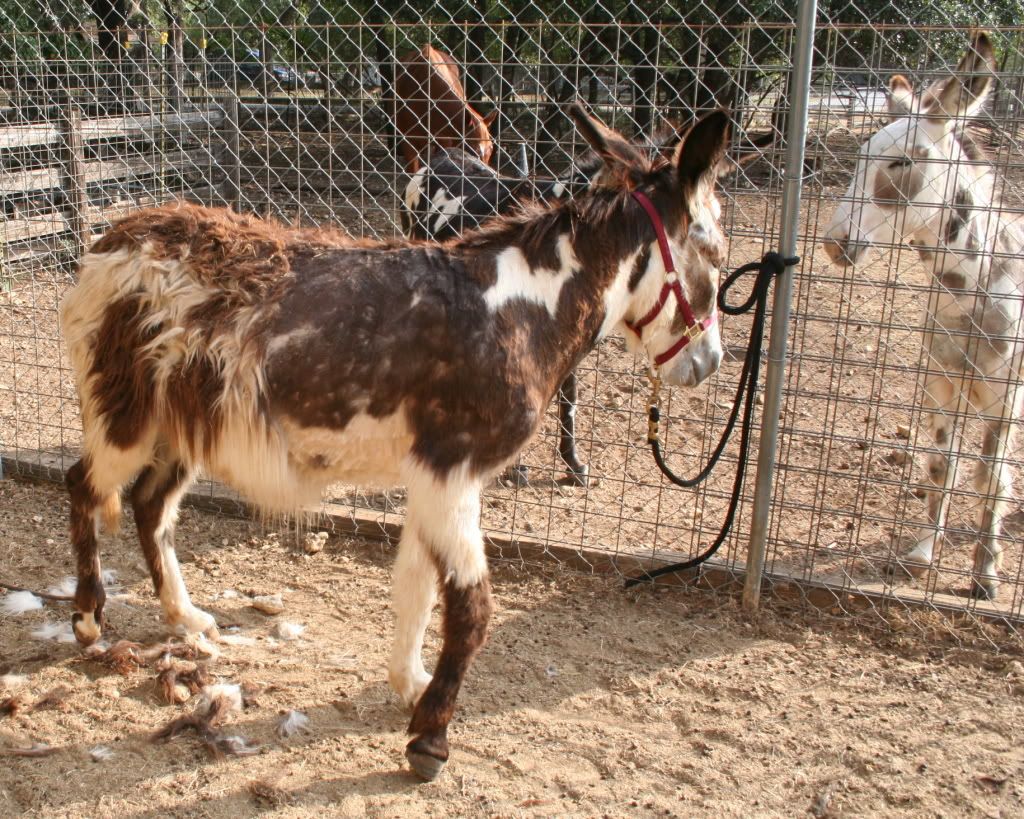
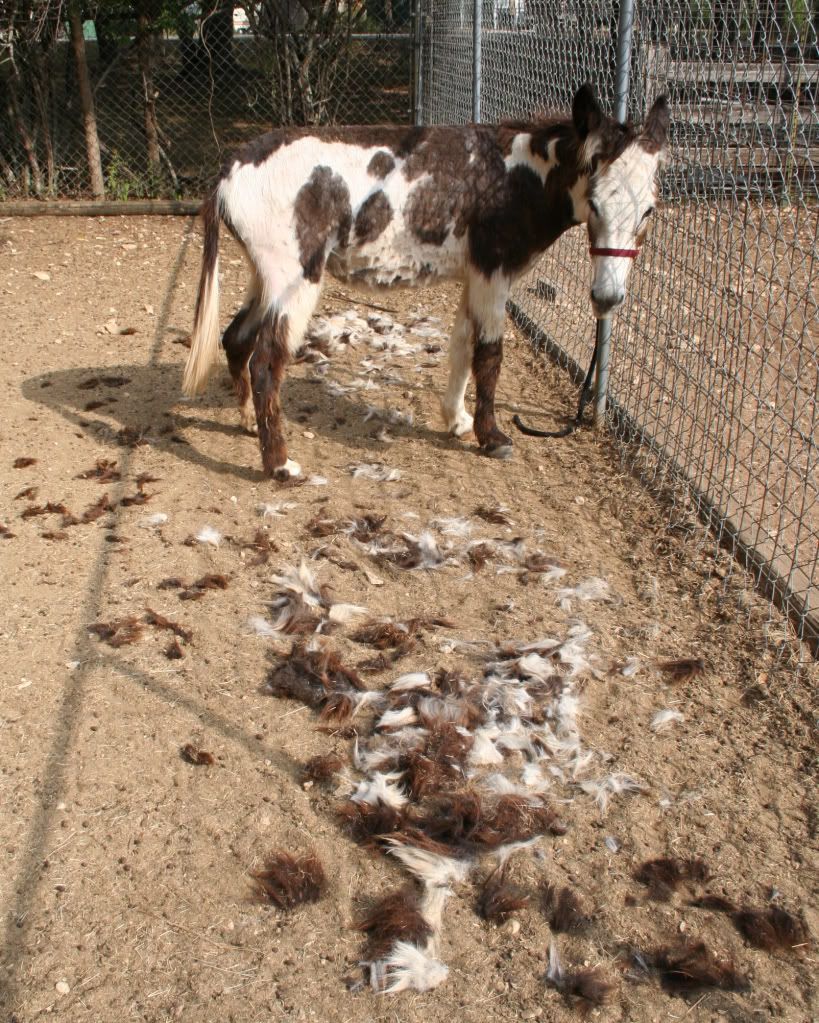
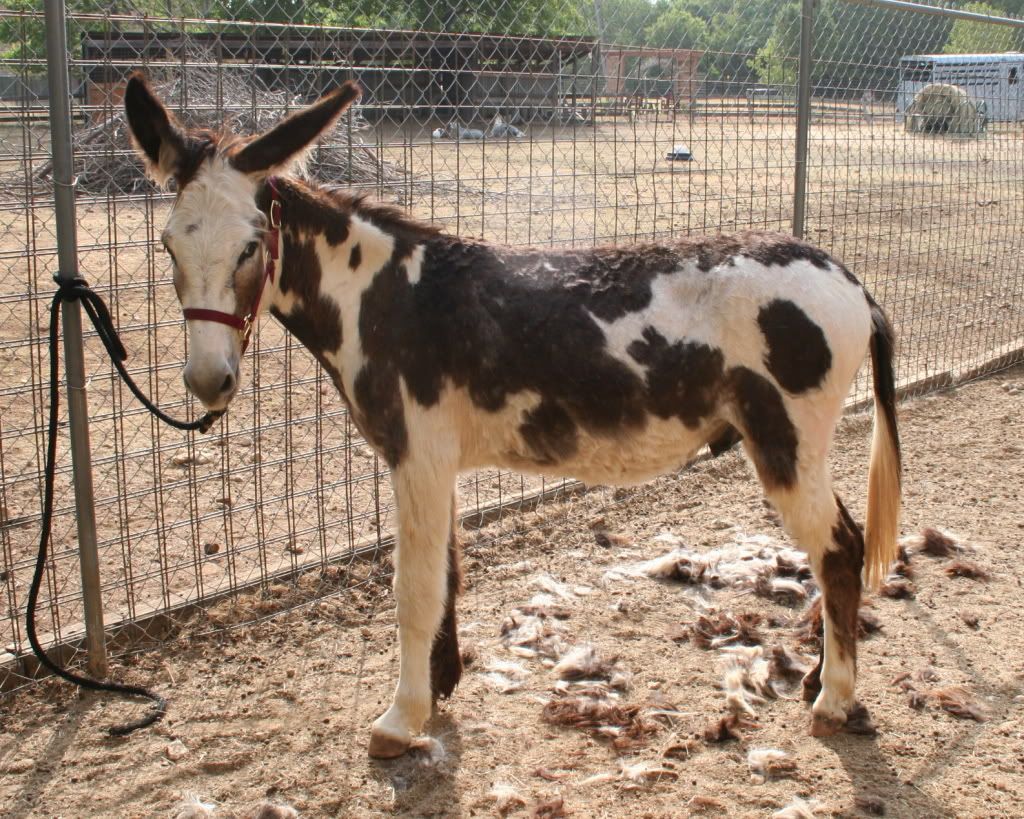
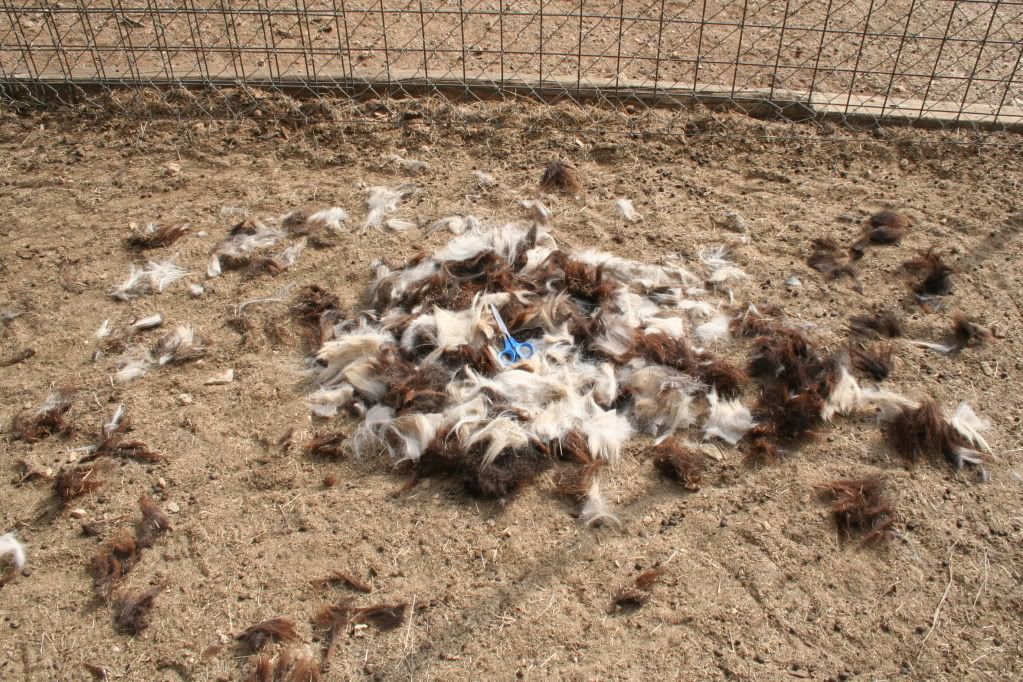
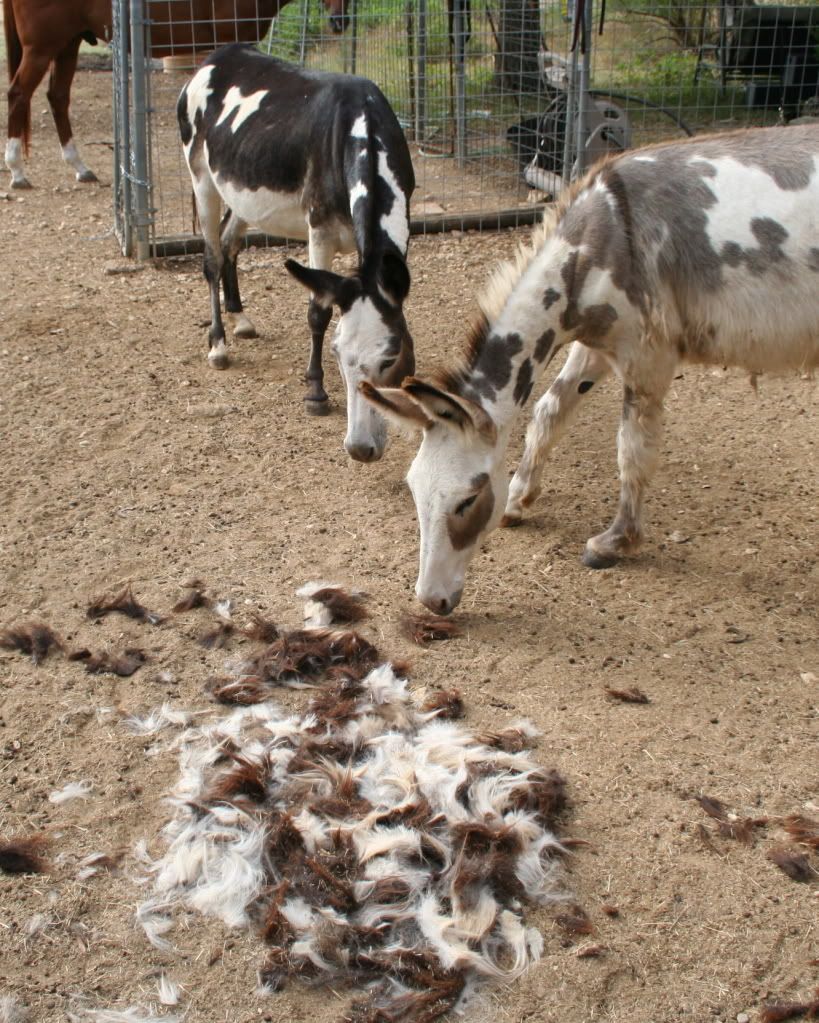
Tessla never shed out his winter coat this summer. I asked our equine vet about it and she suggested doing a major de-worming regimen. That sometimes regular worming isn't enough and if an equine has a parasite problem, they sometimes don't shed out normally. So I gave Tessla a double dose of wormer for five days in a row a little while back. As of two days ago, he still hadn't shed out his coat, though it looked like he might be beginning to. However, watching him, I just couldn't bear to leave him with that heavy coat anymore. So I grabbed an old pair of barber shears that I had and went out and trimmed all his heavy matted hair off. It took about an hour and a half, and Tessla was very patient for the most part. He did wriggle around a little. But I imagine me pulling the matted hair out far enough to get the scissors underneath to trim it off felt a little weird, so I can't blame him for moving around a little. He never tried to get away or anything, he just didn't stand completely still.

Anyway, I'd been online chatting with JJ when I decided to go trim Tessla and she told me to take pictures. So here they are:


BEFORE
You can see how shaggy he is.


Halfway through the first side with Marie and Kanemura looking on.


I swear Kanny is laughing at Tessla, and Tessla is getting mad at him. :-)


All done.

Did that all come off of Me?


Without all that fuzz, you can see what a nicely conformed donkey he is.

Though I still need to trim his belly hair a little bit.


The scissors I used on top of a pile of shorn hair.


Marie and Kanemura examining the scene of the crime.


Tessla checking to make sure there's not another donkey under there.


Tessla may look a little funny. It's hard to do a really neat trim with just a pair of scissors. But at least he should be cooler. And I don't think he really cares what he looks like, as long as he doesn't have to wear all that heavy winter fuzz anymore.

Thursday, July 23, 2009

I love my automotive service center!

Ever since I moved to Cedar Park about 12 years ago, I've been going to the same automotive service center to have my van worked on. I usually bring my van there for oil changes and other regular maintenance as well. They have always taken really good care of me. They have regularly driven me home after I dropped my van off so that I wouldn't have to spend hours in their waiting room. Then they would come and picked me up when my van was ready. They've done pre-long trip check ups on the van for me with no charge. And on the rare occasion that my van actually did need something fixed, I have never gotten the feeling that they have overcharged me or tried to take advantage of me in anyway. And they very easily could have since I know very little about engines and such.

Recently, they went above and beyond even their usual excellent service. One morning my husband's car wouldn't start. When he turned the key nothing happened at all. Since he really had to get to work that day for a big project, he took my van and left his car at home with me. I called Cedar Park Tire and Service and asked Dwain what he thought the problem was. He said it was probably the battery and suggested that I try and jump-start the car and bring it in. Unfortunately, that wasn't feasible for a couple of reasons. First, Foxfire had already left with my van. Second, even if I had another vehicle with which to perform the jump-start, I can't drive my husband's car because it has a standard transmission and I can only drive automatic. However, Dwain was determined to help me.

He sent one of his workers who knew how to drive standard to my house with a jump-start gadget, and he drove my husband's car to the shop, leaving behind Dwain's automatic transmission truck. Dwain said that he wasn't going to be using his truck during the day and that it could stay at my house till my husband had a chance to leave work and meet me at the service center. So my husband's car made it to the shop, and I was able to stay comfortably at home until late afternoon, when I returned Dwain's truck, Foxfire picked up his car with it's new battery installed, and I drove my van home. How is that for service?!?!?! Not many places would go to those lengths to help out a customer.

So if you live in the Cedar Park, TX area and you ever need new tires or service work done on your vehicle, I highly recommend:

Cedar Park Tire & Service
104 N Bell Blvd
Cedar Park, TX 78613-2917
(512) 335-5093

Dwain, Dave and Mark will take good care of you.

Saturday, July 18, 2009

What exactly do anxiety, depression and non-24 CRSD do to me?

It has come to my attention that most people really don't know that much about clinical depression and have even less understanding of what an anxiety disorder is. So I'm going to try and explain a little about what these psychological illnesses do to me not just emotionally, but physically. I did earn a bachelor's degree in psychology when I was in college, but that was over twenty years ago. And frankly, the very basic knowledge that you get from a BS in psychology isn't that useful. So everything I am going to talk about in this post is based on my own personal experience and many, many years of therapy. However, I did use google and wikipedia occasionally to make sure that I was using terminology correctly, and in doing so discovered some new and useful terms to use to describe and define my problems.

My main problem is anxiety. The depression seems to be more of a side effect of the anxiety, though that may be an incorrect assumption on my part. So what exactly is an anxiety disorder? There are actually several different kinds of anxiety disorders that may occur separately or in combination. I not only suffer from Generalized Anxiety Disorder (GAD) which is basically just chronic worry and stress (and which seems to me to be the foundation for most of my other anxiety disorders), but also from Panic Disorder, Enochlophobia, Agoraphobia and some type of Social Anxiety Disorder(anthropophobia or possibly Post Traumatic Stress Disorder). I also suffer from a sleeping disorder that may or may not be related to my anxiety and/or depression.

Panic Disorder seems to be just a more extreme form of GAD. Basically, it means having continuing or recurring physiological fear responses(fight or flight responses) when there is no reason to be afraid. Or when there is reason, having an extreme response when only a mild response is called for. In my case, among other things, it means that I have panic attacks even when there is nothing to be afraid of, and when something stressful actually does happen, these panic attacks can become so severe as to be completely incapacitating. So what exactly happens to me during a panic attack?

When most people think of panic attacks, they imagine the movie version where the person screams and flails about and/or hides in a closet curled up in the fetal position. Well, some panic attacks are like that. And I have experienced that kind, but not very often. In reality, like most things psychological, panic attacks can vary in extremity from mild to full blown. Most of my attacks vary from mild to somewhat intense. A very mild panic attack can simply involve an elevated heart rate and quick shallow breathing. I may not even be consciously aware of one of these mild attacks until Foxfire asks me what's wrong. Somewhat intense panic attacks might include a pounding heart, difficulty breathing, headache, the feeling that your skin is jumping/twitching(possibly caused by spiking blood pressure and/or hyper-firing nerve endings), involuntary muscle twitches, nausea, cold or hot sweats, racing thoughts, difficulty thinking, blurred vision and/or diminishment of physical co-ordination. A full blown panic attack means complete loss of emotional and physical control, and in one case, loss of memory for the event.

One of the stranger symptoms I occasionally suffer is a sort of aphasia. Having trouble speaking during a panic attack is not that unusual. But more frequently, I have trouble understanding speech. In other words, even though I can hear the words perfectly, my brain simply doesn't comprehend them. Sort of like listening to a foreign language, except that the language is English. The more anxious I am, the harder it is for me to understand what is being said. This type of problem is almost always a constant condition associated with a brain injury of some sort, either a trauma or an illness. As far as I know, it is not generally associated with psychological problems. Nevertheless, I sometimes experience it.

So how often do I have one of these panic attacks? Well... almost every morning when I first wake up, I have a panic attack. I refer to it as my Usual Morning Panic Attack (UMPA). (Since my sleep schedule is very erratic due to my sleep disorder, "morning" refers to whatever time I happen to wake up, whether it's 6AM or 6PM.) Sometimes my UMPA is fairly mild and lasts as little as 30 seconds. Other mornings, it can last 30 minutes or more. Very rarely, I don't have an UMPA at all. Those are very good days. Most times, I can still get out of bed even while I am having a panic attack and have done so fairly often. If I hug Foxfire during this time, he can feel my heart racing/pounding. It worried him the first few times it happened, but now he seems to be used to it. Occasionally, my UMPA is bad enough that I can't get out of bed for hours. And even when I make it out of bed, all I can do is lay on the couch and read or watch TV. Reading is usually the most effective way for me to deal with panic attacks, but occasionally, the attack is such that I can't concentrate well enough to read or my vision is too blurry.

Of course, I don't just have panic attacks in the morning. I also have them during the day. Sometimes, they are brought on by a stressful situation, but other times they seem to occur for no reason whatsoever. Like my UMPA, these attacks can vary greatly in duration and intensity. Sometimes, it feels like an attack will wax and wane over several days without ever completely fading away. Those are the days when I just don't leave the house, and frequently, I won't even pick up the phone. These extended panic attacks usually coincide with a depressive episode of at least moderate intensity. Strangely enough, I can still chat online even when I'm beyond the point of being able to talk on the phone. Possibly because you can take longer to respond to people online, or possibly because reading text and typing uses different parts of the brain than talking and listening. I don't know. But sometimes even chatting online is more than I can manage, and all I can do is lay on the couch and wait for it to end. Even when I am asleep, I am not safe from having a panic attack. Sometimes I'll wake up with my heart racing and the sheets will be soaked with sweat.

The most severe panic attack I ever had occurred when I tried to go watch a friend's band perform at a night club. It was very, very crowded. People were literally pressed up against one another. I don't do well in even moderate crowds, so I just kept getting more and more nervous. I should have left, but I didn't. I wanted to stay and watch my friend perform. But eventually, I broke and had a full blown panic attack. I don't remember what I did. There is a completely blank space in my memory. I remember getting more and more stressed out and the next thing I knew, I was standing with about five feet of space all around me and people were staring at me. The friend that had brought me with her to the club came over and led me outside. She didn't ask what the problem was and I didn't ask what I had done, but we never went out together again.

Even though I had suffered from the fear of crowds before that panic attack, that experience has made me even more worried about being in public situations. I had thought that my fear of crowds was agoraphobia, but when I googled agoraphobia, every medical definition that I found described it as being a fear of having a panic attack in a public situation where help was unavailable or from which you couldn't easily escape. But I had been afraid of crowds long before I had that panic attack, and although I did worry about being able to escape, I wasn't afraid of having a panic attack, I was afraid of the crowd itself, of being hurt by the people surrounding me. So I googled “fear of crowds”, and the best term that I could find to describe my fear of crowds was enochlophobia. It's not exactly the most reputable reference, but I couldn't find anything better. The Wikipedia definition of agoraphobia did include a description that seemed more closely related to my fear of the crowd itself rather than just fear of having a panic attack in public. It described ”a condition where the sufferer becomes anxious in environments that are unfamiliar or where he or she perceives that they have little control.” My fear of crowds could well be caused by my inability to predict or control what the people around me are doing. Strangely enough, it seems that there may also be a link between my enochlophobia and my inability to determine spatial orientation once my feet leave the ground. Those with weak vestibular function rely more on visual or tactile signals for spatial orientation and may become disoriented when visual cues are overwhelming, such as in crowds.

Anyway, now, whenever I start feeling stressed in public, I'll try to leave whatever situation I'm in before it gets too bad. Therefore, I have to be careful about getting into situations where I can't just leave whenever I want to, and that rather limits my social life. I recently went on an overnight camping trip, and even though it was just for one night with just my husband and one close friend, I was seriously worried that I might have an intense panic attack during the trip and wouldn't have anywhere to go where I could panic in private. So apparently, I do suffer from agoraphobia as well as enochlophobia.

Fortunately, I do not constantly have panic attacks during most days. And as long as I can avoid anything that stresses me, the attacks I do have are generally mild and short. Unfortunately, it's not just crowds that stress me. All sorts of things can and do cause me stress, but one of the most common stressors I have to face is simply interacting with individual people. Some people cause me more stress than others, and there are the few that very rarely cause me any stress. (I am very lucky to have Foxfire who generally makes me feel less anxious when I am around him. Though even he will occasionally cause me stress.) But being around most people for any length of time almost invariably brings on a panic attack of some sort.

This fear of interacting with others would most likely be called a Social Anxiety Disorder. However, like the definition of agoraphobia, the description of Social Anxiety Disorder doesn't exactly fit my experiences. I do worry about what others think of me, possibly overly much, but mainly I worry about what others will do to me. Whenever I'm with most people, I have an underlying fear that they will attack me, either verbally or physically. I'm fairly sure that this fear developed because of actual events during my childhood. I was repeatedly attacked both verbally(by other students) and physically(by a family member) throughout elementary school and into junior high. (Those experiences could also be the source for my fear of crowds. Students on an elementary school playground could be considered a crowd.) The best term that I could find for this fear is anthropophobia, which literally means fear of people. But it's definitions focus on extreme shyness or fear of blushing, rather than fear of being attacked. I suppose, my problem could be a form of Post Traumatic Stress Disorder, but I hesitate to compare my experiences in elementary school to being in a war. Though Wikipedia does include being bullied during childhood as a source for PTSD. However, in my case, it wasn't the bullies who hurt me, it was all the normal kids who picked on me. The bad boys actually protected me from the others once or twice.

But whatever it's called, this inability to interact normally with others (combined with my other problems) has made it impossible for me to hold down a regular job. I spent most of my twenties and early thirties trying to find a career where I could fit in. Most of the time, I didn't last two weeks before the physiological symptoms of my anxiety and depression became so overwhelming that I simply couldn't go to work anymore. I did manage to last a bit longer at some jobs. (I think the longest was about two and a half months. I was editing training manuals and didn't have to interact with anyone but my supervisor and I didn't even interact with her that much.) But at almost every job, there eventually came a time when I was simply too physically ill to continue.

There were two jobs where I did not become too ill to show up, the first was a bookstore and the second a martial arts studio. However, I was fired from both places because of the disruptions caused by one or another of the symptoms of my anxiety or depression. I actually liked both of those jobs and it was devastating to be fired from them when I believed that I had finally found a place to belong. But apparently, my behavior was just too abnormal to be tolerated. Both managers cited financial reasons for "letting me go", but I know that it was really because of manifestations of my psychological problems. Those failures, especially the second one, left some pretty deep psychological scars. Now, I'm afraid to find a job that I actually like because I “know” that I will just end up hurt when they fire me because I don't really fit in. I don't want to suffer that kind of rejection again.

Perhaps there is some sort of work-at-home job that I could do, but now, even thinking about applying for a job makes me sick to my stomach. The more seriously I think about it or talk about it, the more severe the physiological symptoms become. Just recently, simply chatting online about the possibility of trying to get a job caused me to develop diarrhea and to have difficulty performing physical activities that I could previously do relatively easily.

In addition to the other physical manifestations of my anxiety and depression, I also have a continuing problem with insomnia. Or at least I thought I did. When I read through the insomnia page on wikipedia, I discovered that what I suffer from, though frequently mis-diagnosed as insomnia, is actually a Circadian Rhythm Sleep Disorder-free running type, more commonly referred to as non-24, short for non-24-hour sleep wake syndrome. I had no idea that there was a specific name and diagnosis for what I suffer with. Apparently neither did any of my doctors and therapists since none of them ever mentioned it even though the way that I've been describing it for years is almost the exact same way that it is described in Wikipedia, though with slightly less technical verbiage. Basically, my body's internal systems act as if a day is about 26 hours long. Thus my sleep/wake cycle does not sync up with the normal 24 hour day. It is apparently extremely rare, less than 0.05% of the population has it and most of those who do have it are blind. From what I can tell from skimming through a medical journal article about CRSD's, there are fewer than 100 documented cases of sighted people who suffer from non-24. Though I can't help but think that there are more people out there like me who simply haven't been accurately diagnosed with it. Unfortunately, although I now have a more accurate term for defining my sleep problems, I still don't have a way to fix them. (Though it does explain why the normal insomnia treatments have never really worked for me.) There have been so few cases of sighted non-24 patients that treatment is still very much in the experimental stages and nothing has proven truly effective. However the little data that exists does suggest that this sleep problem is strongly linked to psychiatric problems. Whether it causes them or is an effect of them is unclear. But regardless of it's cause, it's effect is that it is very difficult for me to function normally in society because of my dis-synchronization with the temporal norm.

As for my depression, it's manifestations are less physical and more emotional. It can and does cause headaches, body aches, fatigue and lethargy, but I feel it's effects most strongly in terms of my emotions/thought processes. Like my panic attacks, my depressive episodes can vary in degree and duration. Unlike my panic attacks, my depressive episodes are frequently severe, though they rarely reach the very worst level. My depressive episodes also tend to occur less frequently than my panic attacks, but to last longer. Though it is possible that I simply don't consciously notice mild depressive episodes if they don't last for very long. During a mild depressive episode, I feel tired and simply lack the initiative to actually get up and do anything, even things that I normally enjoy/want to do. During a moderate episode, I feel that nothing I can ever do will really affect anything so why bother doing any thing at all. Physically, it can feel like my body is weighted down by heavier than usual gravity. It is literally hard for me to move. I might also experience headaches and/or body aches. During a severe episode, not only are the headaches, body aches and lethargy even worse, I also feel utterly helpless and hopeless. I cannot believe that my life will ever be better than it is right then, and it seems that the best way to escape the emotional pain (the physical pain doesn't really matter at this point) is simply to end my helpless, hopeless, miserable existence. No matter how hard I try to think about more positive things, my mind keeps coming back to how difficult living is and how easy it would be to die. At it's very worst, I have to literally fight the compulsion to kill myself.

I don't know how to describe that compulsion adequately. It is very different from simply thinking about killing yourself. It is not abstract in the least, it is a very real struggle against an emotional imperative. The closest I can come is to compare it to the struggle not to breathe when you have been underwater a long time. You know you have to wait until you reach the surface, but your body just wants to take that breath in, no matter that you are still surrounded by water. If you stay under water long enough, you eventually give in to that desire to breathe and you drown. You can't help it, the physiological imperative overcomes your knowledge that you will drown. Fighting the compulsion to suicide is like fighting not to breathe under water. I have to continually convince myself that sooner or later I will reach the surface, and if I can just hold on till then, I can survive. And yes, I am afraid that someday that emotional imperative will overcome my knowledge that I will die.

I do not mean for this post to be a cry for help. I have plenty of help from my husband and my therapist. I just want my friends to understand a little better what exactly I go through day to day. I also find that writing things out helps me to organize my thoughts a little better for my own benefit. I certainly discovered several useful things while writing this post. Not only the stuff that I found online about agoraphobia and non-24, but also stuff that I worked out a better understanding of for myself through the process of trying to describe it to someone else. And maybe, just maybe, reading this post will help someone else understand either their self or a loved one just a little bit better than they did before.

Thursday, July 16, 2009

Seventh lesson with Christine

The lesson that I learned this week is that when you're really stressed out and depressed and slightly sick to your stomach, you should just cancel your lesson and re-schedule it for some time when hopefully you'll be feeling better.

I couldn't do anything right at tonight's lesson. Part of it may have been that I was riding Will, who I am not very used to. Part of it may have been that I was using a very slippery leather saddle when I'm used to a grippy synthetic saddle. But I think mostly it was just that I was feeling too bad to be able to do anything right. We did some trot circles and trot poles and that was it. We didn't even try to canter. The best thing that I can say is that I did manage one pretty circular circle. That was it.

If I'm not feeling better next week, I'll just skip a week and hopefully, by the next week, I'll be ready for my next lesson.

Tuesday, July 14, 2009

Donkey talk

I realized that I haven't written much about my donkeys lately. Since this blog is titled Donkey Sense, I think it's high time that I did so. Also, it was time for their worming yesterday and it reminded me how much I love my donkeys. Now most people don't like worming their equines. It's a generally a bit of a fight and unpleasant for both the human and the horse. I didn't want to have to go through that with my donkeys. Especially when I first got them and was working on developing their trust and affection. So... when I very first started worming them, I used a trick that the previous owner of the donkeys had told me. I spread the wormer on a couple of tortillas, rolled them up and fed them to the donkeys. Marie and Tessla were still very excited to get any kind of bread as a treat and were quite willing to eat the tortillas, even with the strange tasting paste inside. However, I didn't want to keep worming them that way.

I'd read about a method of training horses to accept the worming tube in their mouths that involved filling old tubes with honey or applesauce and making the tube a method for delivering treats, rather than that nasty thing with the nasty paste that a human forced into their mouth every other month. So I took some old empty tubes and rinsed them out thoroughly and filled them with honey and went out to teach Marie and Tessla (Kanemura hadn't been born yet) that the little white tube had good tasting stuff inside. I also had a pocketful of carrot sticks which they already knew were treats. (I'll explain about why I use carrot sticks rather than just chunks of carrot later.) Now it's been a long while since I actually did this wormer training, but I have a pretty clear memory of how it went.

I called Marie and Tessla over, gave them each a carrot stick and then held out the tube so that they could sniff it. I had squeezed out a little bit of honey and smeared it on the tip so that they could smell what was inside. Tessla just sort of looked at it then ignored it. Marie gave it a good sniff and then started lipping it. I held it in such a way that she could get the end of it in her mouth, then squeezed out a little honey. Marie tasted the honey, then began to try to pull the whole tube into her mouth. I had to grab the tube with both hands to keep her from getting it away from me. I pulled it completely out of her mouth, made her stop trying to get it back, then let her suck on the end again while I squeezed out more honey. This time, she didn't try to suck the whole tube into her mouth, but she did clamp down with her teeth and kept sucking as I squeezed more and more honey into her mouth. After she'd had most of the tube, I pried her teeth open and tried to give Tessla some of the honey. He really wasn't interested in the tube, but I did manage to squeeze a little bit of honey on his lips which he then licked at. He didn't seem very impressed, so I guessed he just didn't like honey all that much. I held out the tube to Marie again and she was quite happy to suck out the rest of the honey. I was a little worried that the tube might break from her biting on it, but apparently these little tubes are designed to withstand a fair amount of abuse.

I gave Marie honey from the tube several times over the next couple of months. (I'd done the initial training right after worming them using the tortilla method.) Marie very quickly learned to look for the little white tube and was always eager to get her mouth around it and suck the sweetness out. Tessla never did really get all that interested in it, even when I kept smearing honey on his lips. I was a little worried that Tessla would end up being hard to worm, but in general, he's a very agreeable fellow and he's a lot smaller than a horse, so I wasn't too worried.

Finally the time came to worm them again. I figured that Marie would put her mouth on the tube willingly enough, but that as soon as she tasted the wormer, she would pull back and try to spit it out. So I put both their halters on them so that I could control them a little better. I held the tube out to Marie and she put her mouth around it and I quickly squeezed the entire dose into her mouth. What happened next was a total surprise. She clamped down on the tube and kept sucking. I was so startled that it took me a while to pry the tube out of her mouth. And even after I got the tube out and she had plenty of time to taste that what was in her mouth wasn't honey, she still wanted to suck on the tube. I had to keep pushing her away so that I could give Tessla his dose.

As I expected, Tessla didn't put his mouth around the tube and suck the way Marie did. I had to hold his halter and put the tube in his mouth and squeeze. However, he didn't put up a fuss when I did so. He actually stood very quietly and let me squeeze the wormer into his mouth. He did make a funny face and mouthed a little bit, but he didn't spit the wormer back out. So even though he wasn't as easy to worm as Marie, he wasn't exactly difficult. When Kanemura was old enough to start being wormed, I did the same sort of training with him. He wasn't as excited about the honey as Marie, but he didn't totally ignore it like Tessla.

I've now had Marie and Tessla for a little over a year and a half and Kanny is almost a year old. When I go out to worm them, I don't even bother with halters. I do still bring carrot sticks and give them some both before and after the worming. All of them now willingly take the tube in their mouths as soon as I hold it out to them and suck down the worming paste. They don't seem to care about the taste at all. Even after the paste is gone, if I hold out the empty tube to them, they will mouth on it and try to suck any remaining paste out. I reward them for their good behavior with carrot sticks and the occasional sugar cube.

An interesting note about this last session of worming. I've always wormed the donkeys myself. Sometimes Foxfire has watched, but until now, he's never actually helped. This time, he decided that he was going to worm Marie. And this time, although Marie did come up and put her mouth on the tube, she backed away from Foxfire as he was squeezing the wormer into her mouth. Foxfire had to move with her to get all the paste in her mouth before she got away from him. I had been watching this and knew exactly what the problem was. Foxfire was used to worming being a bit of a fight. Ziggy is a good horse, but he doesn't take wormer all that well, so Foxfire's body language was telling Marie that something unpleasant was going to happen to her. Instead of holding the tube like it was a treat that she would only get if she behaved herself, he held it like it was something he was going to have to force down her throat. She picked up on that and it scared her, so she backed away from him. By following her and forcing her to keep the tube in her mouth, he could have really damaged her opinion of the worming tube. Fortunately, she'd had enough positive experiences that this one bad experience didn't sour her. Just to make sure, I went over with an empty tube and held it out to her like a treat and when she mouthed it, I gave her a carrot stick. To be fair, and to reinforce that worming tubes are good, I let all of the donkeys mouth the tubes and then gave them carrot sticks.

Foxfire's experience just goes to show how much your thoughts and feelings as expressed through your body language affect your interaction with donkeys, horses or any other animal. Marie loves those worming tubes, but because Foxfire was tense and was thinking about having to force her take it, she became scared and backed off. Once I came over with my more relaxed body language, she was more than willing to suck on the wormer tube. To be fair to Foxfire, he had been having a very stressful day and at least part of his tension was due to that. Also he was used to having to fight to get wormer down his horse. So his body language reflected his prior experiences with worming. And I hadn't talked to him about body language or about how you should think of the wormer as a treat and not something bad. So it's partially my fault as well. Next time he helps me, he will undoubtedly do better with it.

I promised earlier to explain about the carrot sticks, so here's the explanation. When Ryan and I went to the Equine Affaire for our vacation a couple of years ago, one of the presenters talked about how a horse can sometimes choke on a chunk of carrot. It doesn't happen often, but it can. He also talked about how the carrot sticks (he called them slivers) were smaller and easier to control in terms of portion size. Basically, you don't want to give your horse (or in my case donkey) too many carrots in one day. If you simply break the carrot into chunks you can get four maybe five chunks from one carrot. If you chop it into slivers, you can get twelve or more slivers from one carrot. So you can reward them more frequently without actually giving them more carrot. It's especially helpful in my case since I have bad teeth and can't use my mouth to break the larger ends of the carrot into chunks. So, since I have to use a knife to chop up the carrot anyway, I might as well cut it into long skinny slivers rather than short fat chunks.

When I was first taming Marie and Tessla, the carrot sticks were useful in another way as well. As I mentioned previously, neither Marie nor Tessla had ever been handled by humans before I got them. They hadn't been taught how to properly, gently lip treats from the flat of one's palm. When I tried to give Marie a treat that way, she would put her mouth around my whole hand and then suck/scape the treat into her mouth. She never bit down on my hand, but it still wasn't very pleasant. So it was just easier to hold the carrot stick by one end and point the other end at her mouth and let her take it that way. As she got more used to human interaction, I did teach her the proper way to accept a treat from the palm of the hand, and she now takes sugar cubes and horse treats very neatly that way. It wasn't hard to teach her the polite way to take treats, but it did involve bopping her on the nose and/or pulling the treat away whenever she tried to take my whole hand in her mouth, and I didn't want to do that to her while I was still working on earning her trust and affection.

Anyway, that's it for today. I hope that I haven't bored all you horse people with all this donkey talk.